
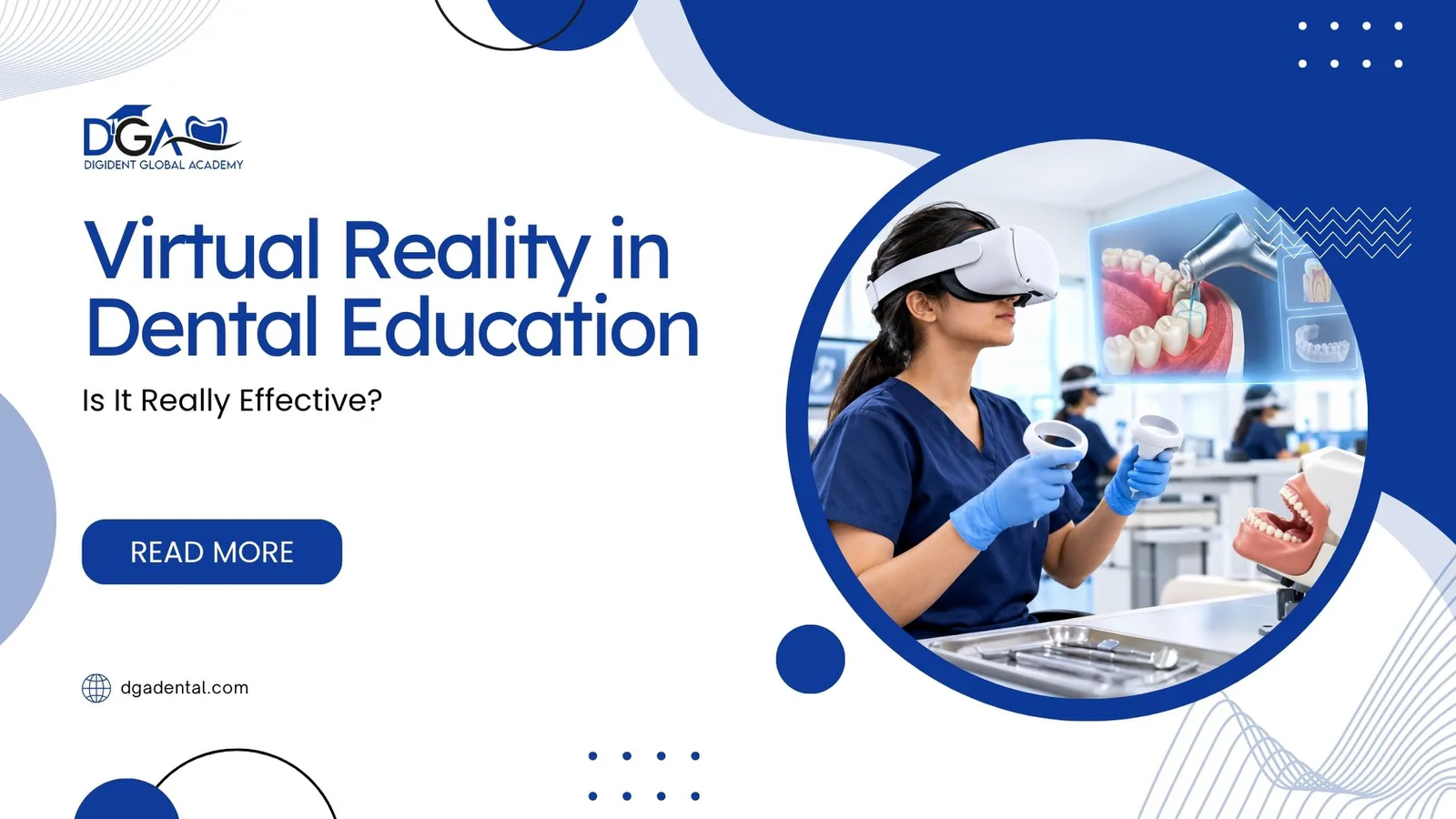
Every VR training pitch tends to land on the same three words: better skills, more confidence, fewer mistakes. You'll hear that from almost every vendor in this category, which is exactly why skepticism is the sane reaction, not applause. So let's set the pitch aside and look at what researchers who don't sell VR headsets have actually found.
What the Studies Actually Found
A 2024 systematic review in BMC Medical Education gathered randomized and quasi-randomized trials comparing VR-based dental training against traditional methods. Nobody involved was selling anything — they were checking whether the claims held up under controlled conditions. Across most of the studies, VR came out ahead.
A separate review focused on implant education found something similar: students trained in VR gained ground on both hands-on skill and theoretical knowledge at the same time, rather than one improving while the other stayed flat. A broader 2025 review of 13 studies on immersive technology found a pattern that's hard to dismiss — VR-trained students got faster at procedures, made fewer errors, and needed less total training time to get there.
None of that reads like marketing copy. It reads like a technology mostly doing what it says it does, on the things researchers currently know how to measure.
Zooming In: Endodontics
Broad reviews are useful, but they can hide variation between procedures — so it's worth zooming in on one area where the research is unusually thorough: endodontics.
A systematic review pulled together fifteen studies on VR simulation for endodontic training in undergraduate dental students, checking four things at once: procedural accuracy, student confidence, error rates, and satisfaction. The pattern held across nearly all fifteen studies — accuracy up, confidence up, errors down.
This isn't "VR is generally good." It's fifteen separate research teams, looking at one specific procedure, mostly landing on the same conclusion — the kind of convergence that's hard to write off as coincidence.
What "Effective" Should Actually Mean
A claim like "VR training is effective" isn't really one question — it's at least three, and vendors tend to blur them together on purpose:
• Does it improve skill acquisition compared to not training at all? Almost certainly yes — there isn't much debate left here.
• Does it improve skill acquisition compared to traditional methods specifically? Harder question. The answer varies by procedure and by study.
• Does whatever gain shows up in a lab setting hold up months later in real clinical work? This is the question with the thinnest evidence so far, mostly because it's the newest one researchers have started asking.
Keeping those three questions separate matters. A vendor can honestly say "the research supports us" while quietly answering the easy version and letting the buyer assume they meant the hard one.
And the Confidence Part, Specifically
"Confidence" gets thrown around so much in marketing that the word is practically worn smooth. So instead of taking anyone's word for it, here's a study that actually measured it. Researchers at Yonsei University built a scenario-based VR program to teach dental hygiene students intraoral radiography, and tracked three things side by side: how confident students said they felt, how competent they actually turned out to be, and how satisfied they were with the experience. All three moved up together.
That combination matters more than any one measure alone. Feeling confident without actually being ready is arguably worse than knowing you're unsure — at least uncertainty makes people double-check their work. A student can feel great about a procedure they just did poorly. That's exactly why studies checking confidence and competence together carry more weight than ones that only ask how it went afterward.
It's also worth noting what this study didn't do. It wasn't a large multi-site trial, and it focused on one specific skill — radiography positioning — rather than the full range of procedures a hygienist eventually needs. That's a reasonable scope for a single study, and exactly why one study, however well designed, shouldn't be treated as the final word. The real value is in how consistently this pattern — confidence and competence rising together, not one outpacing the other — keeps showing up across multiple studies and procedures.
Where the Research Stops Being Convenient
This is the part most vendor content quietly skips. Not every study lines up neatly behind VR, and the better ones admit it.
A 2025 randomized controlled trial in the Journal of Medical Internet Research pitted VR-based veneer preparation training against the traditional method, head to head. The two groups came out statistically even — no clear winner. To their credit, the researchers didn't stretch that into a bigger claim than it deserved: they noted that finding no difference isn't the same as proving the two methods are equal, and said plainly that more work is needed on long-term retention and cost before anyone draws a hard conclusion.
That's not really a mark against VR. If anything, it's a sign the field has moved past "does this work at all" into something harder and more useful: does it work as well for this specific procedure, and does the benefit still hold six months later? Those happen to be exactly the questions a buyer evaluating a program should be asking too.
The One Thing Students Themselves Keep Flagging
One study is worth mentioning precisely because it doesn't flatter VR. Researchers compared a virtual simulator against a traditional physical head-simulator for preclinical dental training. Students generally accepted and engaged with the virtual system — but more than half still felt the physical simulator did more for their actual hands-on skill. The researchers' own conclusion: VR works best as a supplement, particularly well suited to procedures that don't hinge entirely on tactile feedback, rather than a wholesale swap for physical practice.
That's not a contradiction of everything above — it's the same idea from a different angle. Early motor learning still leans on touch in a way software hasn't fully replicated yet, and the students noticed it themselves.
So What Does This Mean if You're Evaluating a Program?
Somewhere specific, not somewhere unlimited. The research backs real gains in skill, speed, error reduction, and confidence — especially early on, while someone's learning a procedure for the first time. What it can't back yet is a career's worth of long-term data showing those gains stick around ten years later. That's less a gap in the research than a gap in time: the technology simply hasn't been in wide use for long enough to answer that question.
That's a fair place for the evidence to sit, and it lines up with how a program like this should actually get used — not as a stand-in for supervised clinical experience, but as a way to walk into that experience with more reps, more honest feedback, and more confidence already built up.
The Headset Isn't Doing the Work. The Structure Is.
Here's something the research keeps pointing at without quite saying outright: it's rarely the hardware driving the results — it's what's built around it.
A University of Leeds study published in the European Journal of Dental Education tested this directly. One group trained with nothing but the simulator's own visual readout. A second had a live instructor talking them through it, no device feedback at all. A third got both at once. That third group pulled ahead on basically everything worth measuring: fewer errors, stronger overall performance, and skills that were still there a month out — not just fresh on training day. Coaching alone wasn't enough. Neither was the device alone. It was the pairing that produced the result.
| That's the exact logic behind DGA's Guide Me and Test Me modes — Guide Me for the coached repetition the research keeps crediting, Test Me for the objective, scored assessment that turns "I've practiced this" into something you can actually point to. |
Questions Worth Asking Before You Commit to a Program
A handful of questions actually separate the programs backed by this research from the ones just borrowing its language:
• Does the program separate coached practice from scored assessment, or is it one blended mode where feedback and grading happen at the same time? The research favors the separation.
• Does performance data get logged somewhere a faculty member or program director can actually review, or does it live only inside the headset, invisible until someone asks? Documentation is what turns training into evidence.
• Is the content built around procedures your team actually performs, using the real systems and workflows involved — or is it a generic simulation that only loosely resembles the real thing? Generic content doesn't transfer the way procedure-specific content does.
• Has anyone been honest with you about where the evidence is still thin, particularly on long-term retention? A vendor willing to say "we don't have five-year data yet" is telling you something true. One who claims certainty they can't back up is telling you something else.
The Takeaway
So is VR training in dentistry actually effective? Based on what's been published rather than what's been pitched: yes, for the things researchers currently know how to measure well — skill, speed, fewer errors, and confidence. The long-term retention data is still catching up, and it's better to say that outright than pretend the case is closed.
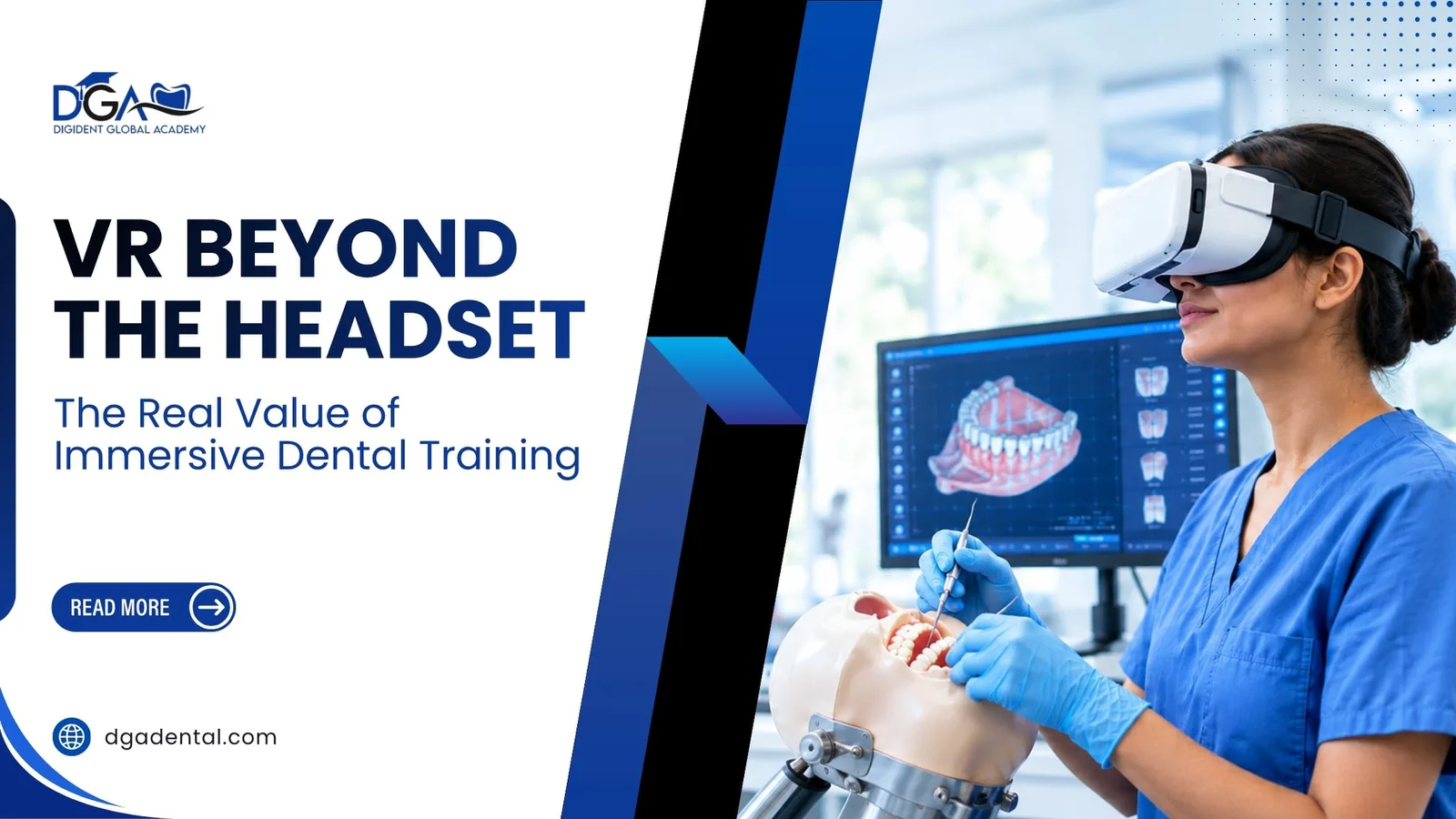
Practically, that means one thing when comparing programs: look for structured practice paired with objective scoring, because that's the combination the research keeps rewarding — not the headset's brand name, and not how good the graphics look.
Want to see how that structure plays out on a real procedure?
Comments
No comments yet
Be the first to ask a question about this technique.