
But traditional hands-on training can be expensive, difficult to schedule, and limited by the number of opportunities available to learners.
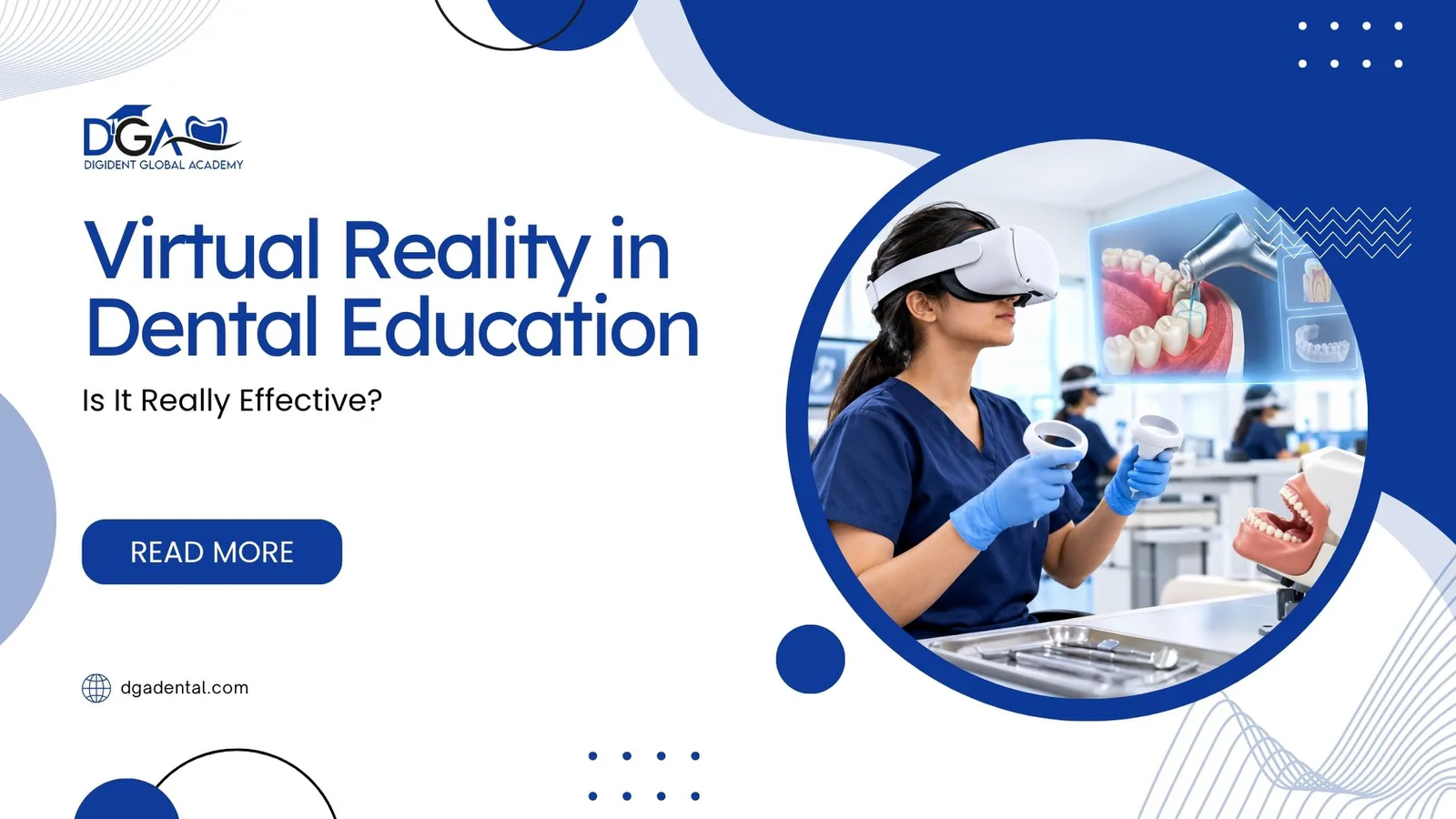
That is where virtual reality (VR) is beginning to change the way dental professionals train.
In a recent episode of the DrBicuspid.com podcast, host Kevin Henry spoke with Dr. Manish Chhabra, a dentist, dental laboratory veteran, and co-founder and CEO of DGA Dental (Digent Global Academy). Their conversation explored how VR can create a new layer of practical training for dentists, hygienists, and dental assistants.
Why VR Matters in Dental Education
Online dental courses have made education more accessible, but they often remain passive. Watching a video or completing an online module can help someone understand a procedure, but it doesn't necessarily provide the muscle memory and practical decision-making required in a clinical environment.
On the other hand, traditional hands-on courses provide valuable experience but can involve significant costs, travel, scheduling challenges, and limited practice opportunities.
Dr. Chhabra saw an opportunity between these two approaches.
After years of working with digital design and dental technology, he helped develop a VR-based training platform designed to allow dental professionals to practice procedures repeatedly in a controlled virtual environment.
Instead of simply watching how a procedure is performed, trainees can actively interact with a virtual clinical environment.
Practice Before Treating a Real Patient
One of the biggest advantages of VR training is the ability to practice without putting a real patient at risk.
A new dental team member, for example, could perform the same procedure multiple times inside a virtual environment. They can make mistakes, repeat the process, and become familiar with the workflow before performing it clinically.
This creates an important learning cycle:
Learn → Practice → Make Mistakes → Receive Feedback → Repeat → Improve
With VR, practice doesn't have to be limited to a single demonstration or a scheduled training session.
Trainees can potentially repeat a procedure dozens of times, helping build familiarity and confidence.
Real-Time Feedback Makes Training Interactive
VR training becomes even more useful when it can measure what the trainee is doing.
DGA's platform tracks elements such as hand movements and procedural accuracy in real time. Instead of simply completing a simulation, the trainee can receive active feedback about their performance.
This turns VR from a passive educational tool into an interactive practice environment.
For dental professionals, precision is critical. Small differences in movement, positioning, sequence, or technique can affect the outcome of a procedure. Real-time feedback can help learners identify areas where additional practice may be needed.
VR Isn't Just for Beginners
It might be easy to assume that VR training is primarily designed for students or new dental professionals.
However, experienced dentists can also benefit from simulation-based learning.
Dentistry continues to evolve, with new technologies and workflows becoming part of modern practices. An experienced dentist may need to learn a completely new procedure or technology, such as digital dentures or implant workflows.
Rather than entering an unfamiliar procedure for the first time in a clinical situation, VR can provide an opportunity to become familiar with the workflow beforehand.
This makes simulation relevant throughout a dental professional's career—not just during initial education.
Customized Training for Dental Organizations
Another important aspect of the DGA approach is customization.
Dental Support Organizations (DSOs), universities, and other educational institutions may have different training requirements. A standardized training library may not always address the exact procedures, workflows, or protocols an organization wants its teams to follow.
DGA can customize training libraries for individual organizations.
This opens the possibility of creating VR training that aligns more closely with an organization's existing educational programs and clinical workflows.
For DSOs with multiple locations, this could also provide a way to introduce standardized training experiences across geographically distributed teams.
Bringing Trainers and Trainees Together in Virtual Space
Perhaps one of the most interesting developments discussed in the podcast is DGA's multiplayer VR capability.
The concept allows trainers and trainees to enter the same virtual environment from different locations.
Imagine a dental instructor in one country and a trainee in another joining the same virtual training session. Instead of relying exclusively on video calls or prerecorded demonstrations, they can interact within a shared digital environment.
This could make remote instruction more immersive and potentially create new possibilities for international dental education.
VR Is a Supplement, Not a Replacement
Dr. Chhabra also emphasizes an important point: VR isn't intended to replace hands-on dental training.
Real clinical experience remains essential.
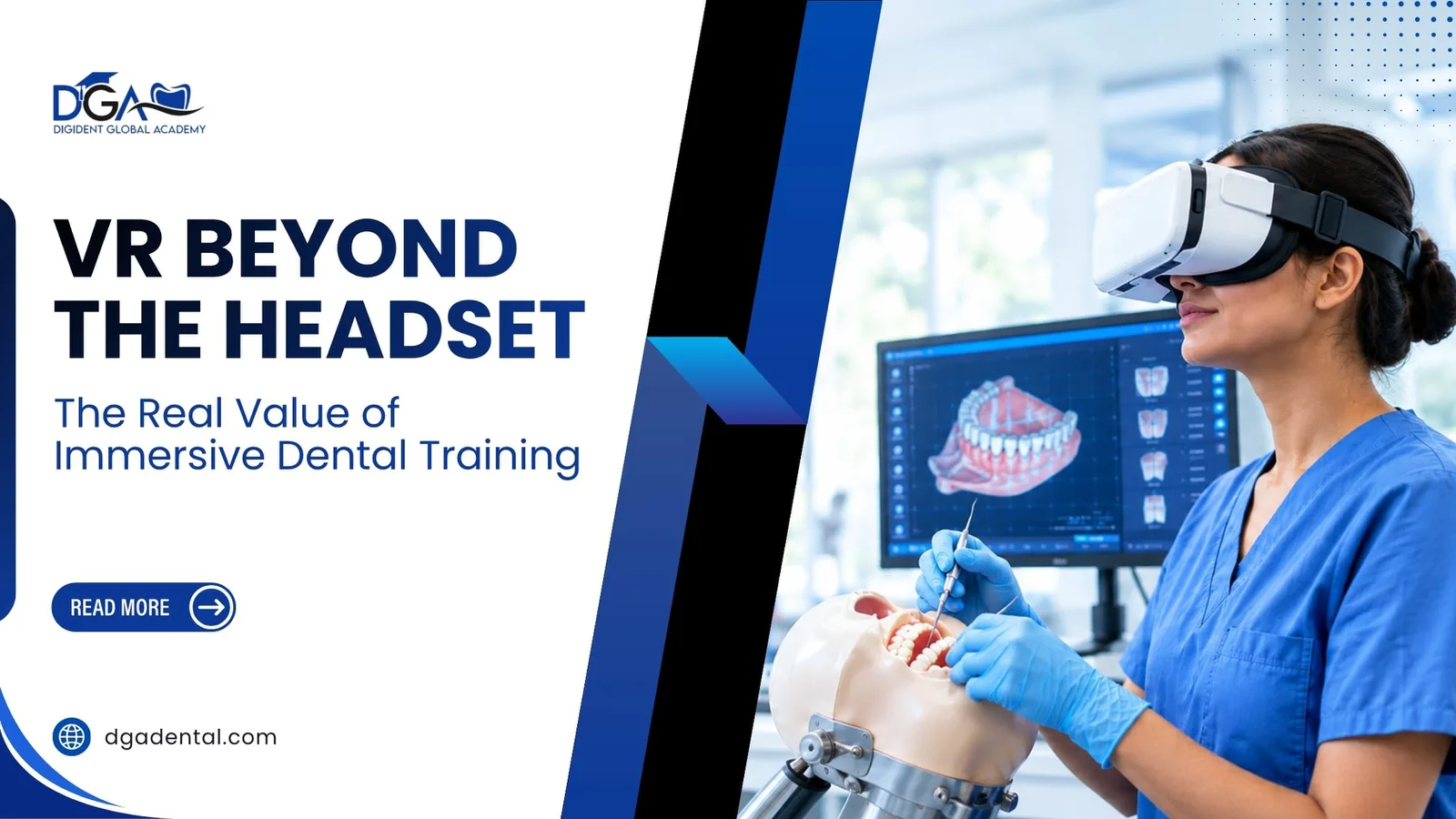
Instead, VR can work as a supplemental training layer before or after an in-person course.
For example:
Before hands-on training: Trainees can use VR to become familiar with the procedure and workflow.
During hands-on training: They can apply what they have already practiced in a real instructional environment.
After hands-on training: VR can provide additional repetition that helps reinforce what they learned.
This combination could help address one of the biggest challenges in professional education: retaining skills after a course has ended.
The Future of Dental Training Is Becoming More Immersive
Dental education is moving beyond textbooks, lectures, and video demonstrations.
Technologies such as virtual reality, digital dentistry, artificial intelligence, and advanced simulation are creating new ways for dental professionals to learn and practice.
VR offers something particularly valuable: the ability to practice an active skill repeatedly in a controlled environment.
For students, it can provide additional preparation. For new dental team members, it can help familiarize them with procedures. For experienced professionals, it can provide a way to explore new workflows. And for organizations, customized virtual training could support more consistent education across multiple locations.
The key is not choosing between VR and hands-on education.
The opportunity may be in combining them.
As Dr. Chhabra's work with DGA Dental demonstrates, virtual reality could become another important tool in the modern dental education toolkit—helping professionals practice more, learn more actively, and enter real clinical environments better prepared.
Learn More
To learn more about DGA Dental and its VR-based dental training solutions, visit dgadental.com or contact Dr. Manish Chhabra at drmanish@dgadental.com
Comments
No comments yet
Be the first to ask a question about this technique.